


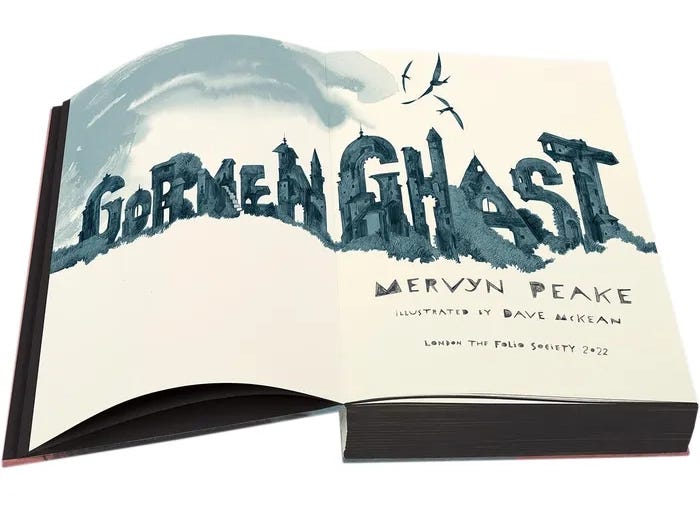
Some way through last year, I saw an announcement that The Folio Society were releasing a limited edition boxed set of Mervyn Peake’s Gormenghast Trilogy, illustrated by Dave McKean and introduced by Neil Gaiman. I’ve loved these stories since I was a teenager, and it’s hard to explain my reaction without sounding a bit silly. They’re just books. Just paper, thread, ink and glue. And yet my heart rages to know that these delicious objects were conceived, desired, championed, expertly crafted and sent out into the world. With a limited number of 750 sets, it was priced at A$1,650. Too much for me. But I don’t mind not owning them. It excites me just to know that there exists both the will to make such books, and the market to buy them. McKean’s contribution is stunning, and the binding is extraordinary. They deserve to be expensive. They make me think a lot about the best a book can be; the best the object of a book can be.
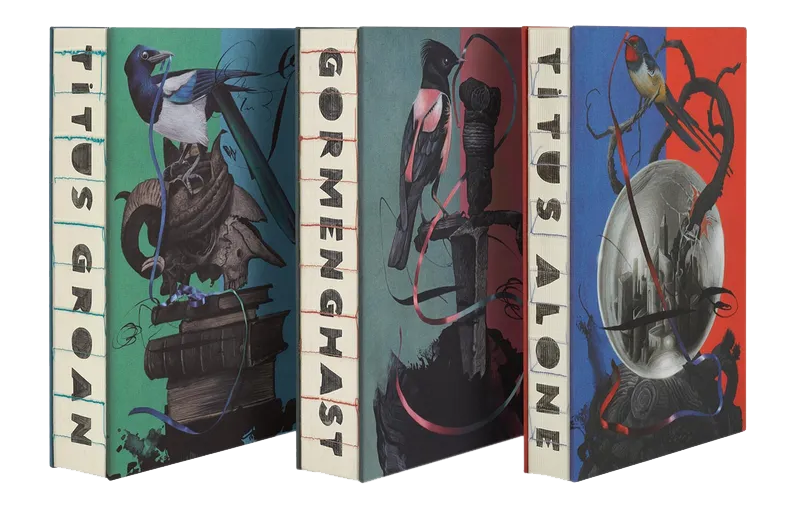
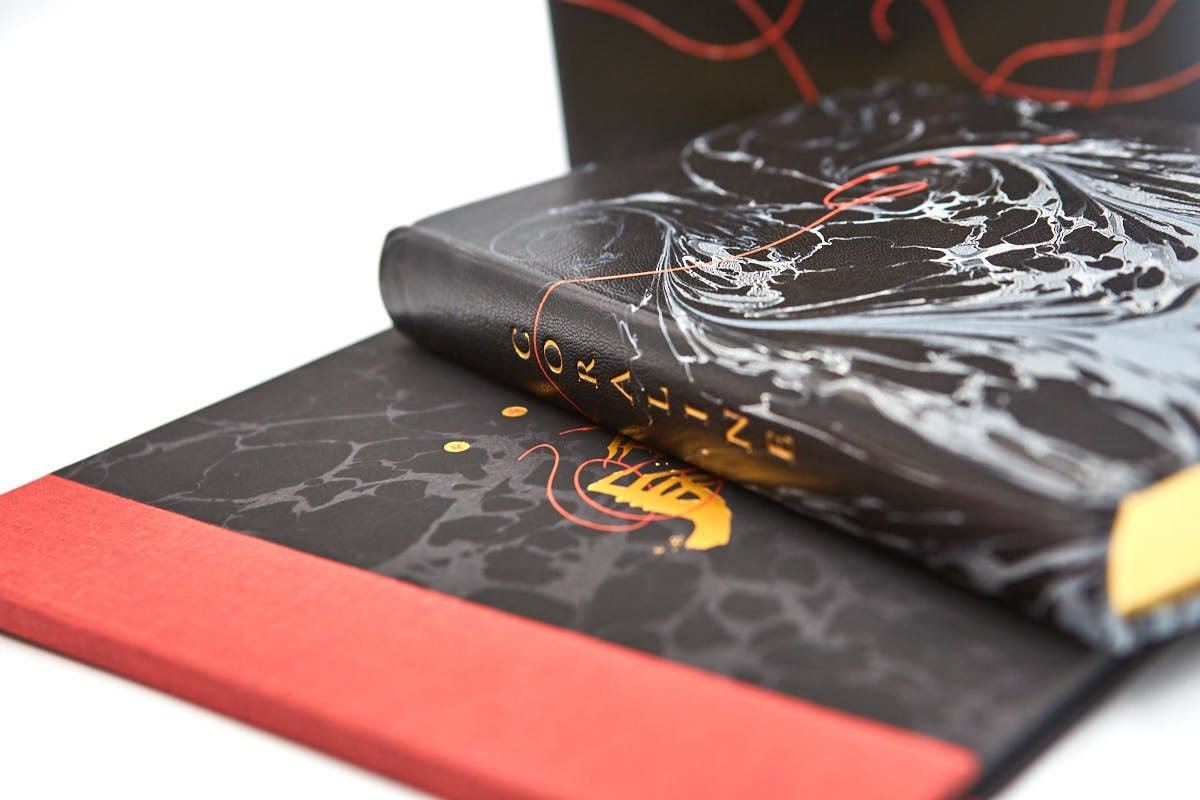
The books were printed in Italy with an open-spine binding, Setalux cloth covers, 142 new colour illustrations, and presented in a hand-made, cloth-covered, foil stamped and screen printed presentation case. Like most of The Folio Society’s work, I think they look spectacular. But there are other publisher’s taking the pursuit of fine bookmaking to even greater heights. Lyra’s Books, also in England, not only hand binds their books, but prints them with traditional letterpress. Like Folio, they produce both new editions of public domain works, as well as very fine editions of modern titles. As of this writing, they are preparing to release three editions of Neil Gaiman’s Coraline. The most expensive of these is the Lettered Edition, which is letterpress printed in black and red ink, with new illustrations by Rovina Cai, on 160gsm mould made paper, bound in hand marbled goatskin, and presented in a black leather solander box, lined with grey suede. It also comes with a cloth quarter-bound portfolio, containing a selection of colour prints from the book. The print run is only 26 copies, and they cost a hefty £2,500 (about A$4,896). Of course, they’ve all sold out.
I’m describing products for serious collectors, but what interests me most is the craft of bookmaking, how good it can be, and how it can connect to the crafts of writing and picture making. I want to make my own books. Not because I don’t like traditional trade publishing - I do. But as an artist, it just makes sense to pursue the making of the book as part of the process. Art is a cultural act. The industrial manufacture of physical books is a commercial act. These two aspects of book publishing are linked and can work together so well. But they’re also distinct and often in conflict. Making a book by hand extends the cultural act through to the finished product. So much of art is admiration. Writing books is an admiration of the world. Binding books carefully is an admiration of the writing. It’s the making of an object that is both a house for the idea, and an extension of the idea itself.
It’s worth noting that neither Folio or Lyra are selling new books; they’re selling existing works that are widely beloved. They could never sell such extravagant editions without the prior mass distribution of cheaper copies that readers have accessed at low prices and fallen in love with. This is why my praise of handmade books is not a denigration of the trade book industry. They work together. Writers need their work discoverable and accessible, and working with a trade publisher is a great way to do that. But they can also backup that accessibility with artisan objects infused with the same love and care that saturates the content inside. If someone grows a strong enough connection to the content of your writing, and they have the means, they will seek out ways to participate in that content in a devotional way. Don’t leave them wanting. And don’t miss out on such a rewarding step in the bookmaking process. If you’re currently negotiating a publishing contract, see if you can keep the rights to a deluxe edition. It’s an opportunity worth keeping up your sleeve.
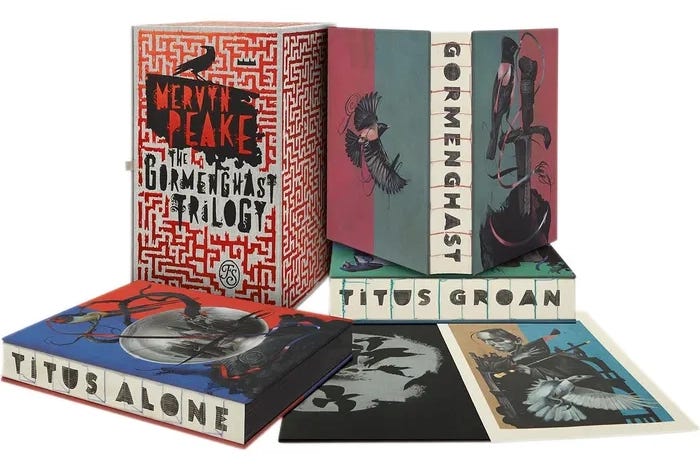
These beautiful Gormenghast books from The Folio Society are such a fine admiration of Mervyn Peake’s work, and a demonstration that art, craft, effort, expertise and tradition are important, meaningful, valuable and desired. They make us think about the best a book can be. We like beautiful things. We like the fruits of skill and purpose. These are the things that make my heart rage. I don’t need to own books like these to benefit from this celebration of human art and endeavour. But I do want to make them.